

Complete Guide to Gym Flooring: Types, Costs & Installation
April 27, 2026
How to Maintain Gym Flooring for Long-Term Performance?
April 29, 2026
Maintaining a gym floor is essential for safety, performance, and aesthetics. Over time, constant foot traffic, sports activity, and equipment use can cause wear and tear. When that happens, facility managers typically consider two restoration options: resurfacing the gym floor or refinishing. While these terms are often used interchangeably, they refer to different processes with distinct purposes, costs, and outcomes. Let us find out more about it.
What is Gym Floor Refinishing?
Gym flooring refinishing is a more rigorous restoration process in which the top layer of the wood is sanded down, exposing fresh wood beneath. After sanding, it is lacquered again with a new stain and protective coating (such as polyurethane).
This is done to remove deeper scratches, dents, and discoloration. The applied finish has a longer-lasting, more durable result because it is attached directly to the raw wood.
Refinishing should be done every 5-10 years, depending on use.
It is perfect for gym floors that exhibit severe wear and tear, color imbalance, or slight structural disconnection. However, it is more time-consuming, involves special equipment, and might require temporarily shutting down the facility.
What is Gym Floor Resurfacing?
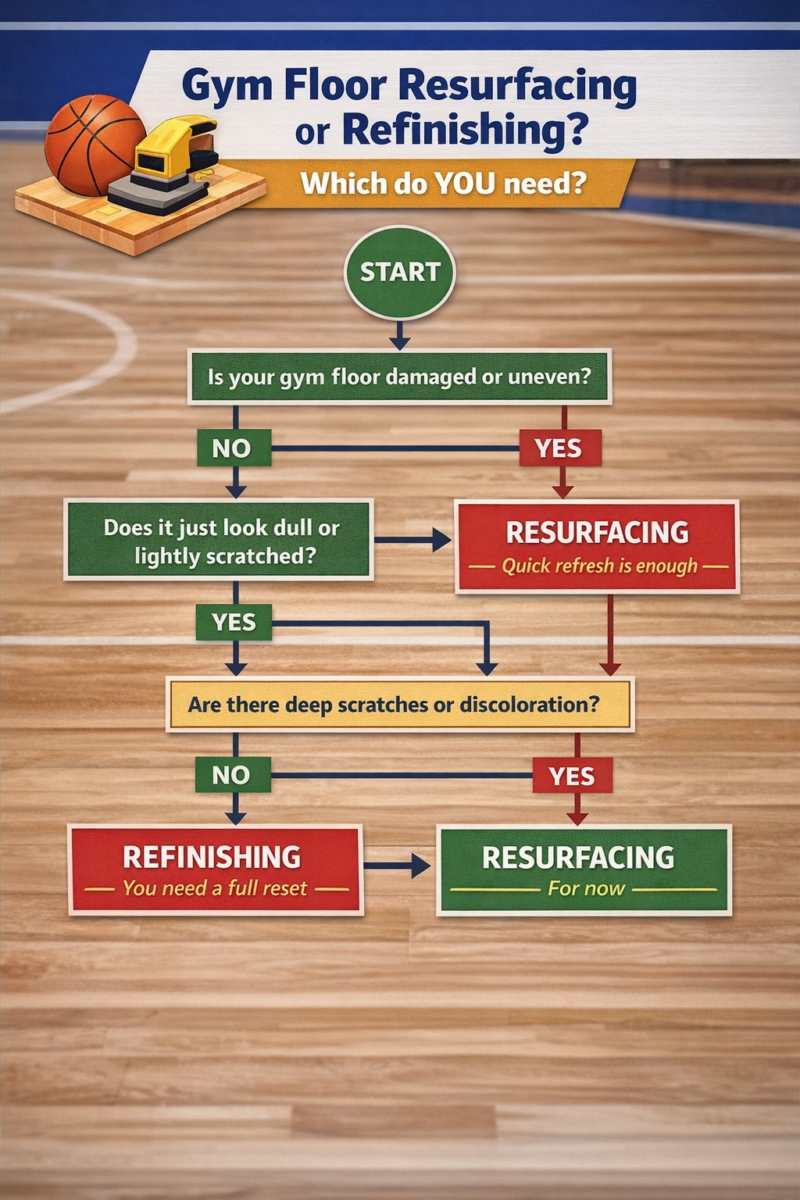
Resurfacing, on the other hand, is less invasive. It is intended to enhance the floor’s appearance by repairing surface damage. This is normally accompanied by light sanding or buffing to remove small scratches, followed by the application of a new topcoat.
In gym-specific situations, resurfacing can involve replacing some of the damaged boards and refinishing the surface.
Resurfacing is quicker, less invasive, and cheaper than refinishing because it does not go as deep. It is ideal for floors that are not yet in need of repair but appear dull or somewhat old. But it will not correct more serious problems, such as distorted wood or extensive damage.
Key Differences Between Resurfacing and Refinishing
Here are some pictures of the major differences between the two:
| Aspect | Resurfacing | Refinishing |
| Frequency | Every 1–3 years | Every 5–10 years |
| Wood Removal | None | Thin wood layer removed |
| Floor Lifespan Impact | Delays major work | Extends total lifespan |
| Grip & Performance | Temporary boost | Fully restored |
| Risk Factor | Low | Moderate if mishandled |
| Prep Needed | Minimal | Extensive setup |
Final Thoughts
Both gym floor refinishing and resurfacing play important roles in maintaining the floor. Knowing their differences helps you make informed decisions that balance cost, durability, and performance. Regular inspections and timely maintenance can also extend the life of your gym floor, ensuring it remains safe and visually appealing for years to come.
Restore Your Gym Floor with Expert Care
Keep your gym floor safe, durable, and game-ready with the right restoration solution. Whether you need resurfacing for a fresh look or refinishing for long-term performance, All Colorado Surfaces is here to help.
Contact our team today for expert guidance and professional gym floor restoration services tailored to your facility.