

Preventing Moisture Damage to Basketball Court Flooring
August 19, 2026
Garage Floor Epoxy: Is It Worth the Investment?
September 17, 2026
Key Takeaways
- The best flooring for a home gym depends on your workout style, equipment weight, room location, and need for impact and noise reduction.
- Rubber gym flooring is one of the most versatile choices for strength training and high-impact workouts, while hardwood and foam can suit lighter or lower-impact activities.
- Epoxy flooring provides a durable, seamless, and easy-to-maintain foundation, especially over concrete floors, but may need rubber mats in heavy lifting zones.
- Home gym flooring thickness should increase with the level of impact and equipment weight the floor needs to handle.
- When comparing home gym flooring options, it is necessary to consider subfloor suitability, maintenance issues, noise problems, and the necessity of hiring professionals for installation.
A home gym floor has to do more than look good.
It may need to absorb impact, support heavy equipment, reduce noise, resist sweat, and protect the surface underneath. The best flooring for a home gym therefore depends less on trends and more on how you’ll use the room.
A yoga and mobility space has very different flooring needs from a garage gym with a squat rack and loaded barbell. Some homeowners want the resilience of rubber gym flooring. Others prefer the appearance and stability of hardwood. In certain spaces, epoxy flooring can provide a durable, easy-to-clean foundation, particularly when installed over concrete.
What Makes a Good Home Gym Floor?
A quality residential gym flooring system should match the space’s demands. Before choosing a material, consider:
- Durability: Can it withstand repeated foot traffic, equipment, and dropped or moved weights?
- Impact absorption: Does it help protect the subfloor from shock?
- Traction: Will it provide stable footing during lifting, cardio, or functional training?
- Noise reduction: Can it reduce vibration and sound transfer?
- Moisture resistance: Is it suitable for sweat, spills, and changing conditions?
- Maintenance: Can it be cleaned without complicated upkeep?
Rubber vs. Hardwood vs. Foam: Which Is Best?
Rubber Gym Flooring
For many home gyms, rubber remains one of the most versatile options.
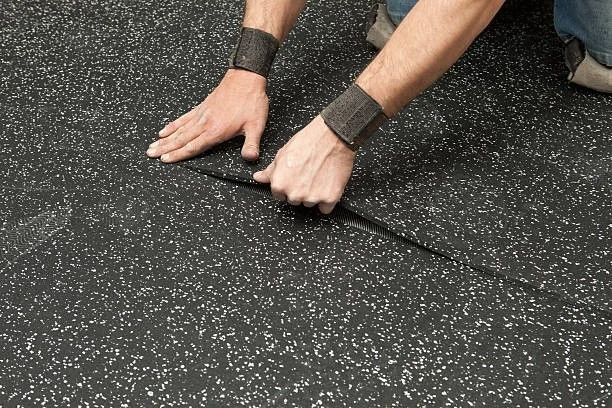
Rubber provides dependable traction and can help absorb impact and vibration. It is commonly used in weight rooms, functional training spaces, and areas with free weights. Available in rolls, tiles, and mats, it can also be adapted to rooms of different sizes.
The trade-off is that thicker or denser rubber may cost more and can have a noticeable odor when first installed, depending on the product.
Hardwood Flooring
Hardwood can work well in home gyms designed for lighter training, stretching, mobility work, or studio-style workouts. It creates a polished appearance and can provide a firm, stable surface.
On the other hand, hardwood tends to be less resistant to damage from heavy objects. Heavy equipment could also easily damage the floors unless you take special protective measures.
If appearance is a priority, hardwood may be a strong choice. If the room is built around powerlifting, it usually needs supplemental mats or a dedicated lifting platform.
Foam Flooring
Foam tiles are soft, lightweight, and relatively easy to install. They often suit yoga, bodyweight training, and low-impact exercise.
The main drawback is the foam’s inability to withstand heavy loads. Heavy machinery, dragging, or repeated weight drops can warp the material. Therefore, foam is often better suited for light training than serious strength training.
Where Does Epoxy Fit In?
Epoxy flooring is often used as a durable finished surface over concrete, making it worth considering for garages, basements, and multipurpose workout areas. Homeowners looking at epoxy floors in Denver may find them particularly useful as a seamless, easy-to-clean base layer.
Although epoxy delivers many advantages, it does not provide the shock absorption that rubber offers. Therefore, some gyms prefer epoxy-resin floors with added rubber matting or flooring material in areas prone to heavy impact, such as lifting zones.
That combination helps balance appearance, durability, and targeted protection.
How to Choose Home Gym Flooring
Step 1: Identify the Room
Start with the existing surface and environment.
Is the gym in a basement, spare room, garage, or dedicated addition? Concrete, wood subfloors, and existing finished floors may each require a different approach.
Step 2: Identify the Workout Type
Think about what actually happens in the room.
Strength training, HIIT, yoga, cycling, dance, and mobility place different demands on flooring. Choose for your primary use, not for every possible workout you may try once.
Step 3: Evaluate Impact and Noise
If the gym is above another living area, vibration and sound transfer may be major concerns.
Rubber generally provides more impact and vibration control than a hard surface alone. Foam can feel softer, but it may not offer the durability needed for heavy training.
Step 4: Consider Maintenance
Choose a surface you can maintain. Sealed epoxy flooring is relatively easy to wipe and sweep, while rubber and other materials should be cleaned according to manufacturer’s recommendations.
Step 5: Choose the Material
Rubber is the preferred flooring choice for gyms that require variation and durability. Wood is better suited for lighter spaces like studios and similar formats. Foam is the best option for low-impact training. Epoxy can also help create a durable floor covering, supported by a combination of rubber in high-impact areas.
Step 6: Determine Whether Professional Installation Is Needed
Some interlocking tiles and mats are suitable for DIY installation.
Larger rolls, permanent systems, and epoxy floors in Denver, however, may require professional preparation and installation. Proper subfloor preparation can affect how the finished floor performs and how long it lasts.
Ready to Choose the Right Flooring for Your Home Gym?
Planning a home gym that needs to perform as well as it looks? Contact All Colorado Surfaces to discuss durable residential flooring solutions, including professional epoxy flooring and gym flooring options designed around your space, equipment, and training needs.

Frequently Asked Questions About Home Gym Flooring
Is rubber flooring the best option for a home gym?
Rubber is one of the most versatile home gym flooring options, especially for strength training and high-impact workouts. It offers good traction and durability while helping absorb impact and vibration. However, the best choice still depends on your workout type, equipment, and existing floor.
What is the best flooring for heavy weightlifting?
Dense rubber flooring is often a strong choice for heavy weightlifting because it can provide better impact protection than standard foam or exposed finished flooring. For serious lifting areas, thicker rubber, additional mats, or a purpose-built platform may provide extra protection.
How thick should home gym flooring be?
The right thickness depends on how you’ll use the space. Light exercise may require only a thinner surface, while general strength training often benefits from thicker, denser materials. Areas used for heavy lifting or dropped weights may need additional protective flooring.
Can home gym flooring be installed over concrete?
Yes. Many home gym flooring materials can be installed over properly prepared concrete. Rubber mats, tiles, and other systems are commonly used over concrete, while epoxy can also be applied as a durable finished surface before adding protective flooring in high-impact zones.
How do you clean and maintain home gym flooring?
Regular sweeping or vacuuming helps remove dust and debris. Clean spills promptly and follow the manufacturer’s recommendations for the specific material. Avoid harsh products that could damage the surface, and inspect high-use areas periodically for wear, compression, or loose edges.