

How to Choose the Right Rubber Gym Flooring?
October 13, 2026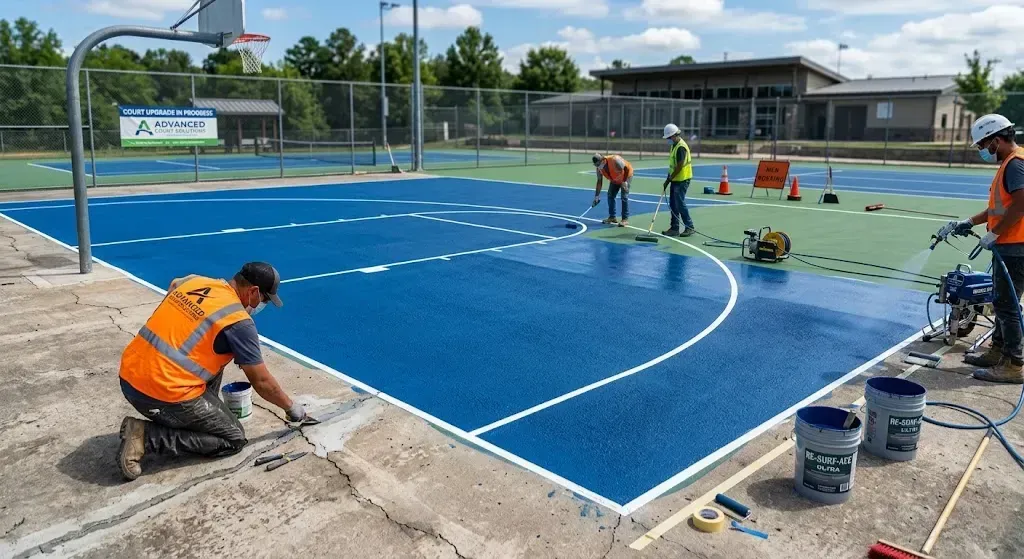
Key Takeaways
- Refreshing by resurfacing an existing court that is usable.
- Replacement can be used to resolve these deeper structural issues.
- An inspection will help you select the most appropriate one.
Introduction
A tennis court can look worn long before it needs replacement. Cracks, faded color, rough spots, and poor ball response can leave owners wondering what comes next. Should you resurface, repair damaged areas, or replace the court? Knowing the difference helps you choose the right path without paying for work you may not need.
What Is Tennis Court Resurfacing?
Resurfacing tennis courts provides a fresh surface whilst leaving the existing base intact, as long as it is sound. Damaged areas are repaired prior to applying the new surface, as well as preparatory work to the surface, and application of new coatings and line work.
Tennis court restoration is an option if you have a worn tennis surface but still have a solid sub-base. The appearance of the surface can be greatly improved, and surface wear slowed down. Please don’t assume that any visible cracks will mean a completely new tennis court. It’s far better to get a surface inspected first to see whether or not it can be restored.
When Does Resurfacing Make Sense?
Resurfacing is worth considering when the court has surface-level wear, but the underlying structure remains usable. Faded coatings, minor cracking, worn areas, and changes in traction can all point toward this option.
The goal is not simply to make the court look newer. Proper work should create a smoother, more consistent playing surface. For owners looking for tennis court repair near me, a repair-first approach can make sense when the damage is limited, and the base remains stable.
Outdoor courts are exposed to sun, moisture, temperature changes, and freeze-thaw conditions. These can damage the surface. Regular attention can catch problems early. Tennis court restorationcan keep the existing court useful while improving its condition.
When Is Replacement the Better Choice?
Replacement is a much bigger project. When the existing surface is damaged, the surface orientation of the affected area might need to be changed. This can be required when issues move beyond the initial and impact the foundation, drain, or overall balance of the structure.
If there is extensive structural damage, significant leveling issues, or an uneven foundation, foundation underlayment may be necessary in the short term to end up with a smooth, even floor. At this time, it’s time for full replacement to be considered.
Just because a court is old does not necessarily mean it needs to be replaced. If you came across this article thinking about how to locate atennis court repair near me, get it assessed initially. The answer is not always indicated by how old or run-down it is and is dependent upon what is taking place below the water’s surface.
How Do You Choose Between the Two?
Begin by obtaining a professional assessment of your tennis court. In this assessment, look for signs of wear such as cracking, surface wear, poor drainage, and unevenness, as well as the condition of the underlying structure.
Additionally, consideration must be given to local weather conditions to develop a surface that will withstand ongoing use of your property in Colorado. Proper preparation and quality materials are essential.
Restoring your tennis court could be the best way to save it. If, however, the base of your tennis court is severely damaged, then it is likely to be more cost-effective to re-lay the court entirely. Compare tennis court repair options near you by searching online. View the whole court, not just how it looks!
Conclusion
The difference comes down to the condition beneath the visible wear. A strong base may only need repairs and a fresh surface, while deeper structural problems can call for a rebuild.
All Colorado Surfaces provides tennis and pickleball court services and basketball court resurfacing in Denver Metro, with a focus on Southeast Aurora and Centennial. They take a practical approach to court repair, resurfacing, and maintenance, helping owners understand what their surface needs.
FAQs
Can a cracked tennis court be resurfaced?
It can be, depending on the type and extent of the damage. Have the court inspected before deciding.
Is resurfacing the same as replacement?
No. Resurfacing works with the existing court, while replacement involves rebuilding the surface and, when needed, its supporting structure.
How do I know if my court needs restoration?
Look for cracks, fading, worn coatings, uneven areas, or changes in play. A professional assessment can give you a clearer answer.